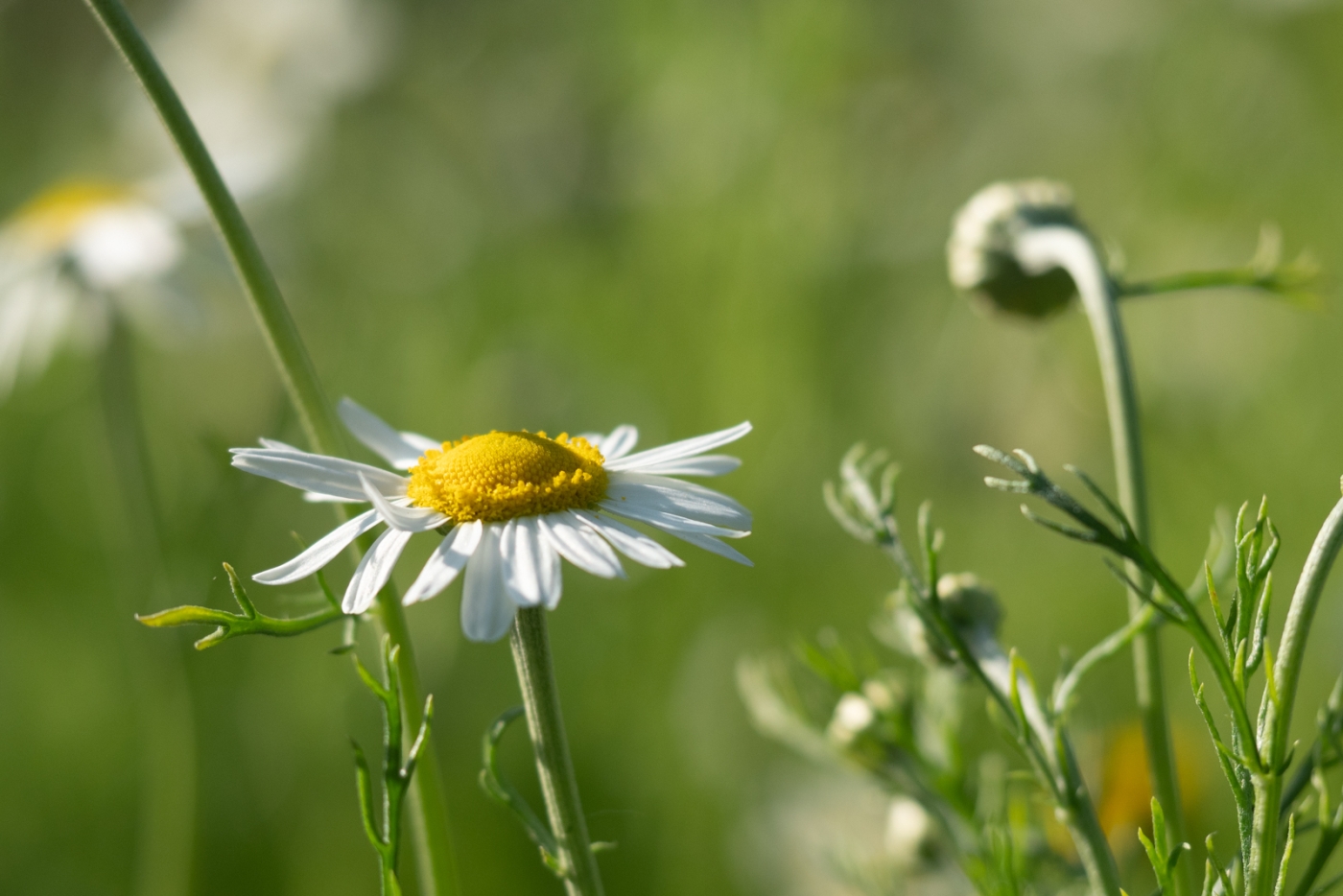
Chamomile, Roman

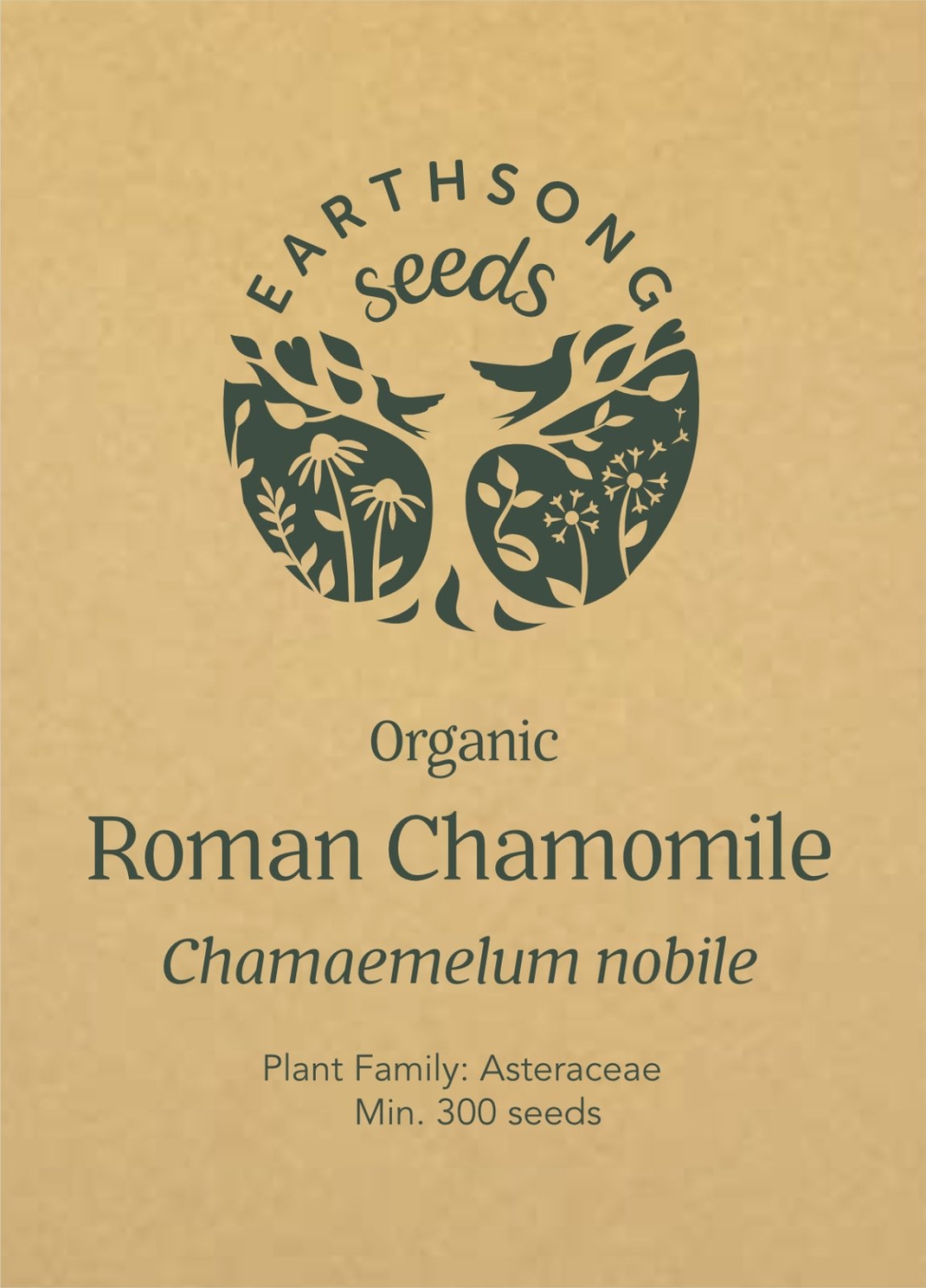
Chamaemelum nobile

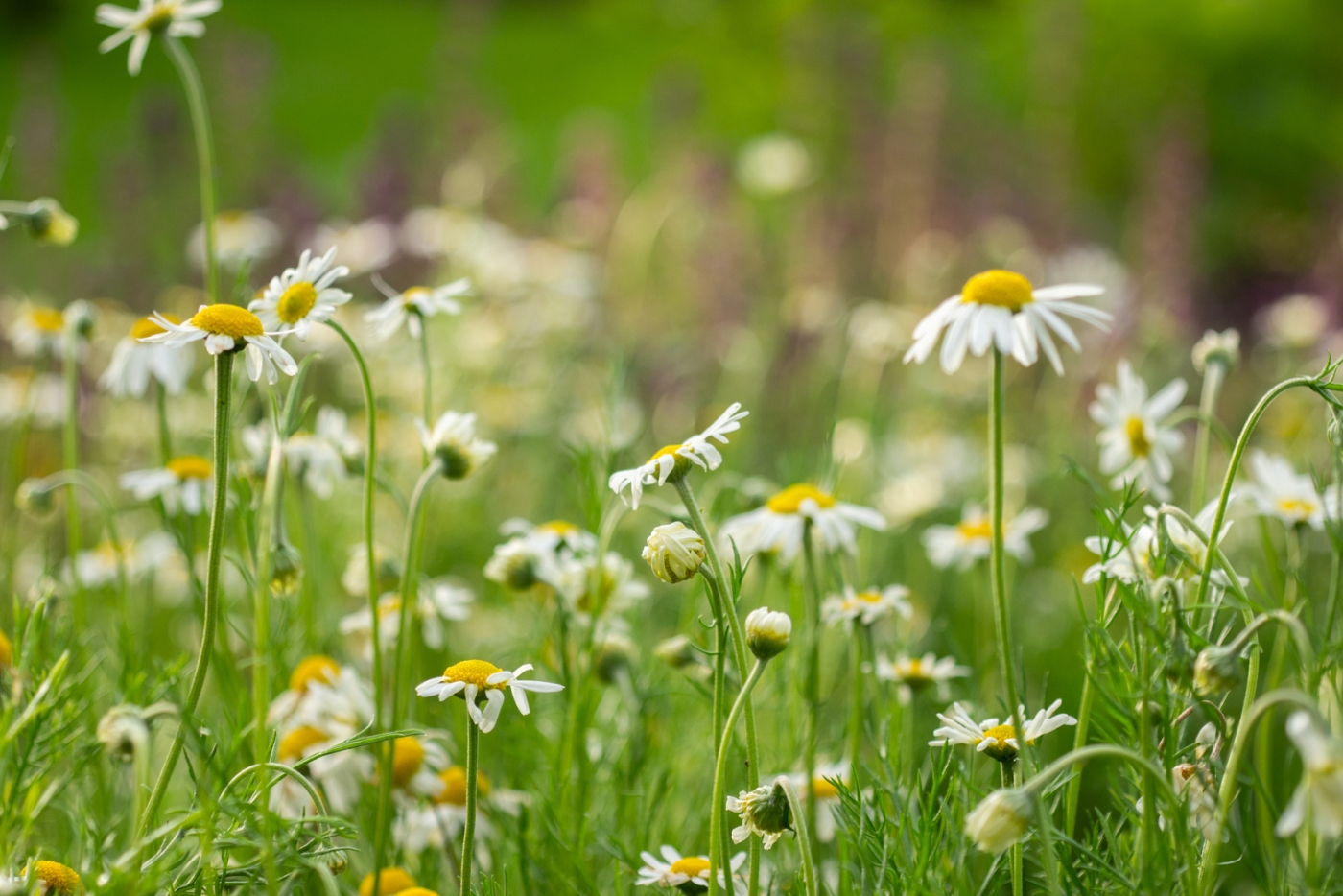
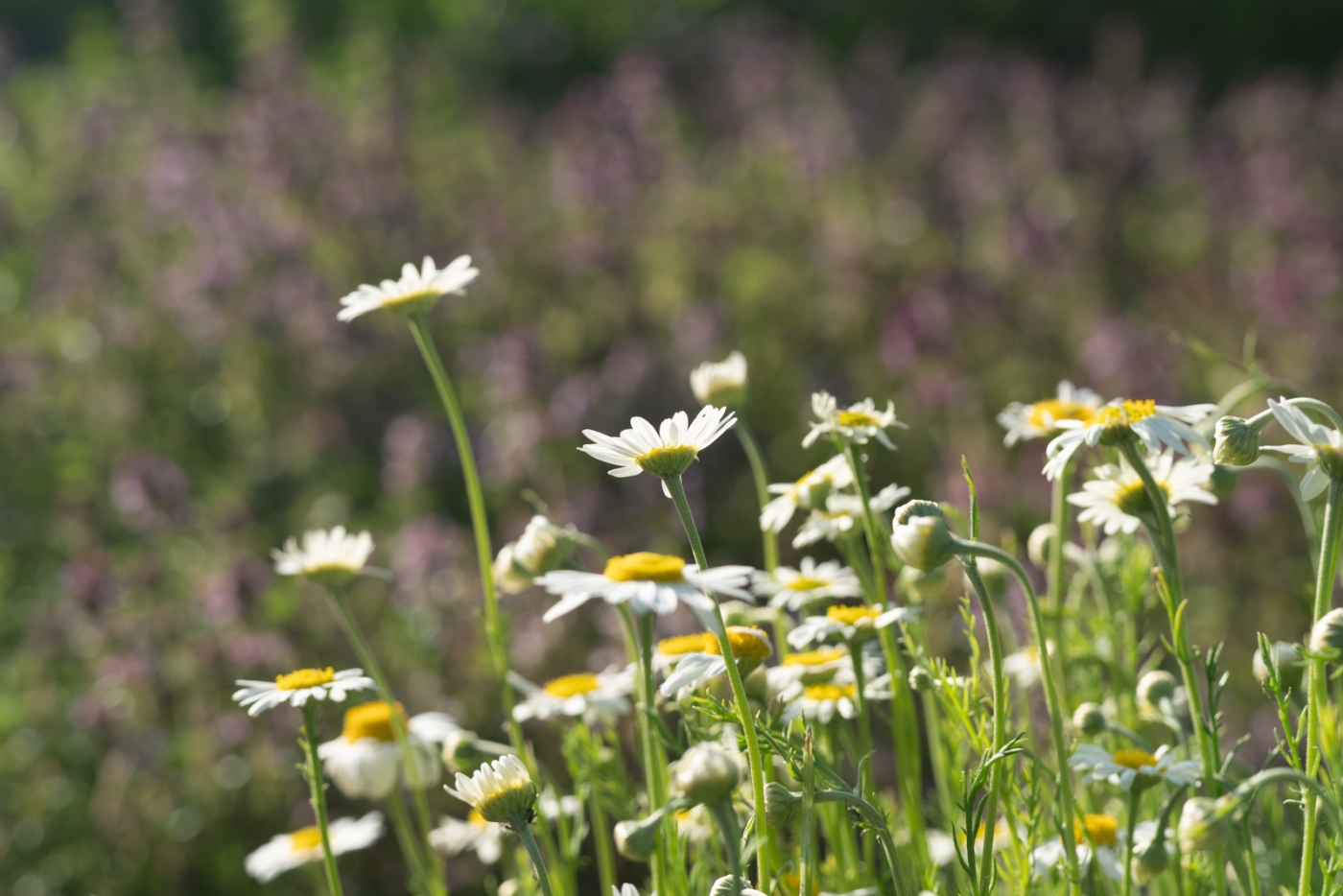
Also know as English Chamomile, Roman Chamomile’s daisy-like flowers produce a sweet, herbaceous aroma that is as bright and delicious as a perfect summer’s day.

The name chamomile comes from the Greek ‘chamos’ meaning ‘on the ground’ and Greek ‘melos’ meaning ‘apple’—indicative of chamomile’s aroma which resembles that of apples. Its other botanical name of Anthemis nobile comes from the Greek meaning ‘noble flower’ alluding to its notable therapeutic properties.

We grow two species of chamomile; Matricaria chamomilla, commonly known as German chamomile, and Chamaemelum nobile, known as Roman chamomile or lawn chamomile. Both species are used interchangeably to make ‘chamomile tea’. In some respects they are similar, but they also have some key differences. German chamomile is an annual that behaves like a perennial on account of its tendency to self-seed and re-establish itself where it grew the year before. Roman chamomile, on the other hand, is a true perennial. From the perspective of a gardener, and drinker of chamomile tea, the main difference is that German chamomile produces a LOT more flowers, much more quickly, and they are much sweeter than the comparatively bitter flowers of Roman chamomile. However, Roman chamomile has a much sweeter essential oil with a strong affinity for the skin and mood. Both thrive in full sunshine in well-drained sandy soils.

£2.75
Categories: , ,
Sowing and Growing

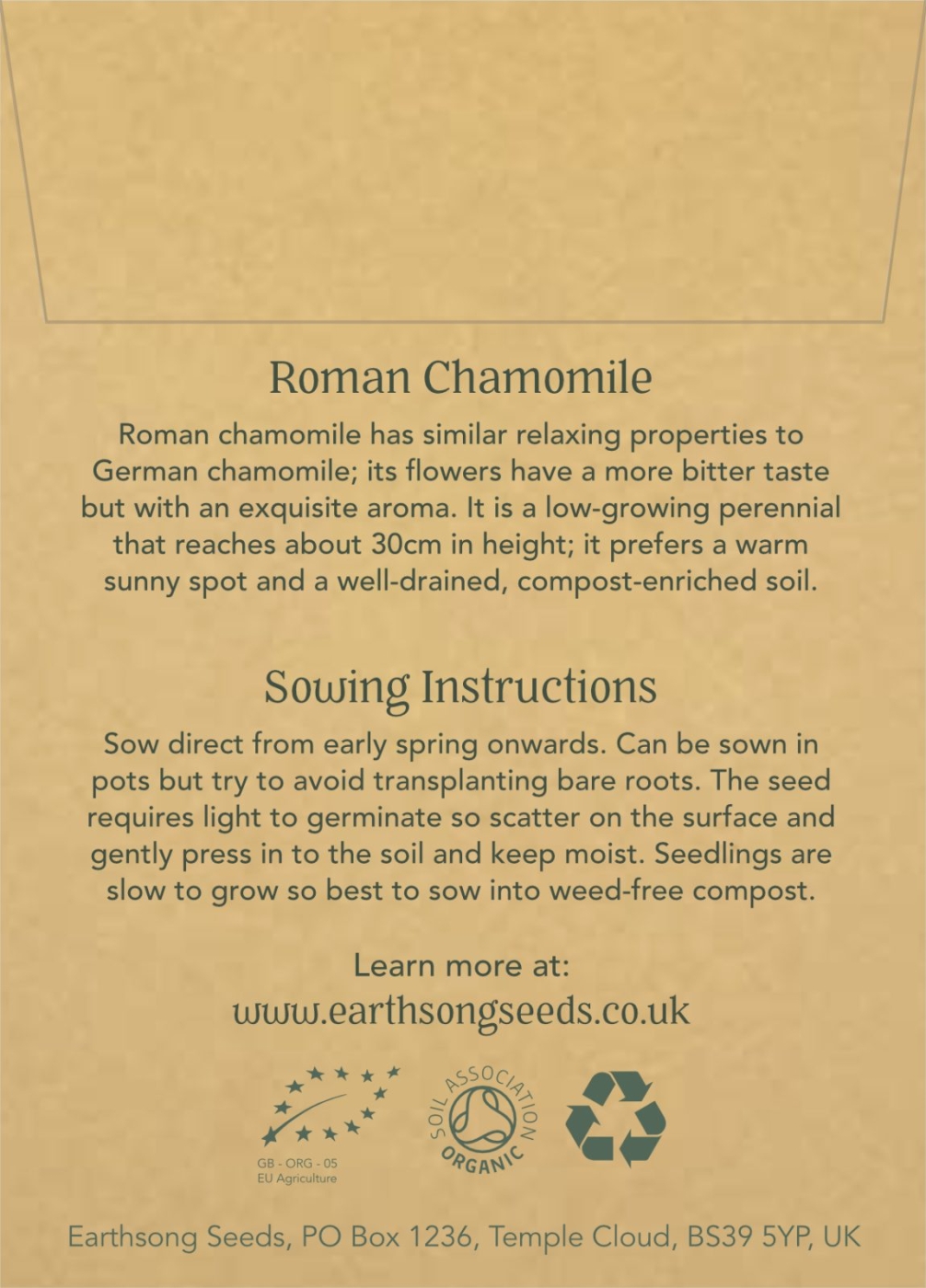
Roman chamomile is a low-growing, spreading perennial that is easy to grow from seed, but slow to establish in its early stages. Seed can be sown directly from early spring onwards, once the soil has begun to warm. It can also be sown into pots or trays, though care should be taken when transplanting as it does not enjoy root disturbance, particularly if plants are allowed to become root-bound or bare-rooted.

Sow seed on the surface of the compost or soil and gently press it in; do not cover, as the seed requires light to germinate. Keep the surface evenly moist until seedlings are established. Germination can be slow and uneven, often taking 2–3 weeks or longer, so patience is required. Because young seedlings grow slowly at first, it’s best to sow into very clean, weed-free compost or a well-prepared seedbed.

Once established, plants gradually spread to form low mats of foliage, typically reaching around 20–30cm in height when in flower. Roman chamomile prefers a warm, sunny position and well-drained soil, and generally performs best in lighter, moderately fertile ground. Very rich soils can encourage leafy growth at the expense of flowers, while heavy or waterlogged soils should be avoided.

Roman chamomile is fairly drought tolerant once established, though regular watering will help young plants establish more quickly. It is a perennial plant and will return year after year, gradually spreading by creeping stems.

Growing Roman Chamomile Lawns

Roman chamomile has a long history of being used as a fragrant lawn or ground cover. To establish a chamomile lawn from seed, sow thinly onto a finely prepared, weed-free surface in spring or early summer. Press the seed firmly into the soil to ensure good contact, but do not cover. Keeping the area consistently moist during germination and early establishment is crucial, as seedlings are slow-growing and easily outcompeted by weeds.

Chamomile lawns are best suited to light foot traffic rather than heavy use. Once established, plants can be lightly trimmed or mown to encourage dense, even growth, particularly after flowering. Mowing should be infrequent and set fairly high to avoid scalping the plants.

Chamomile lawns perform best in full sun and well-drained soil, and generally require far less feeding than a conventional grass lawn. Occasional hand-weeding in the first year will help the plants knit together and form a resilient, aromatic ground cover over time.

Once fully established, a Roman chamomile lawn can be long-lived, low-growing, and wonderfully scented when walked on, especially in warm weather.

Uses and Benefits

Roman chamomile is used much like the German chamomile, having many similar uses for digestive, nervous and skin conditions. It is renowned for ameliorating restlessness and irritation as it has the effect of giving you more space and greater resilience. Its bitterness adds to the cooling effect it brings to anywhere there is excess heat.

Whilst the uses may be simlar to German chamomile their constituents are not. C. nobile’s essential oil has little of the blue chamazulene’s found in M. recutita and much higher levels of the piney esters that give it such an appealing freshness. It is predominantly relaxing and extremely gentle making it suitable for helping any situations reflecting over-sensitivity. It is a plant that brings a feeling safety and joy helping us to access the more peaceful and profound places with us. And it certainly makes a beautiful home in any herb garden.

Harvesting and Preparation

Harvest the flowers at the beginning of flowering when the essential oils are at their highest, and they are in their full glory. Either use the tried-and-tested 5-finger method, using your hand as a ‘comb’ to gently pop the flower-heads from their centipedal stems. You may have to hold the stems under your hand so you don’t disturb the roots. For larger quantities you can use a berry harvester.

These flowers can then be used fresh or laid out on a drying rack to dry. Like most herbs they are best dried at a low temperature with good air-flow, around 35C for 12 hours and then stored in an air-tight container.

Make a flower water for a face and body wash. Collect a small handful of the Roman chamomile flowers add to a clear glass jar, cover with water and seal with a lid. Place in the sunlight for 2-3 hours and enjoy as a refreshing wash for revitalising your skin and uplifting your spirits.

Wonderful as a floral bath too.

For a tea, put seven fresh flower-heads or a tablespoon of the dried flowers in a cup of bolied water and infuse in a covered pot for 10-15 minutes to enjoy her soothing nurture.

Inhaling steam containing Roman chamomile is extremely soothing. Use a handful of fresh flowers with boiling water in a bowl. Once the herbs have infused for a few minutes put a towel over your head and place over the bowl. Breathe deeply through your nose and mouth for 5-10 minutes.

For a tincture macerate dried flowers 1:5@45% alcohol.

For an infused oil, macerate 1 part of the freshly-dried flowers in 4 parts olive oil for two weeks.

For an essential oil….grow a lot! 1Kg of the fresh flowers will yield just 1ml of the pale-yellow essential oil.

One potential downside of the sesquiterpene lactones is that they can act as mild to potent allergens for susceptible individuals. Reported reactions have ranged from varying degrees of allergic contact dermatitis all the way up to severe anaphylaxis requiring emergency treatment. Because these compounds are so widely distributed among the Asteraceae, cross reactions can easily occur. A person might become sensitized to the sesquiterpene lactones in one plant (e.g., Ragweeds – Ambrosia spp.) and subsequently will have a reaction to a novel species (e.g., Chamomile or Yarrow) in the family. This is why the herbalist should be cautious when using Asteraceae herbs with people who have a tendency toward respiratory and contact allergies or problems with chronic eczema / atopic dermatitis.

Species Info
Soil
Stratification Needed?

Stratification not required

Herbal Tradition

Western

General Uses

Medicinal

Can be sown direct?

Yes

Herbal Uses

Cerebral, Eyes, Mood, Nervous system, Skin, Sleep

Flower Colour(s)

White, Yellow

Hardiness

H6 (hardy – very cold winter)

UK Native

No

Height
Flowering

April, May, June, July

Life Cycle

Perennial

Sunlight
Recommended Sowing Times
Make Your Own

Aromatic water, Capsule, Cream, Essential oil, Herbal Bath Salts, Herbal pills & lozenges, Massage Oils, Poultice & Plasters, Salves, Steam Inhalation, Tincture

Description

Also know as English Chamomile, Roman Chamomile’s daisy-like flowers produce a sweet, herbaceous aroma that is as bright and delicious as a perfect summer’s day.

The name chamomile comes from the Greek ‘chamos’ meaning ‘on the ground’ and Greek ‘melos’ meaning ‘apple’—indicative of chamomile’s aroma which resembles that of apples. Its other botanical name of Anthemis nobile comes from the Greek meaning ‘noble flower’ alluding to its notable therapeutic properties.

We grow two species of chamomile; Matricaria chamomilla, commonly known as German chamomile, and Chamaemelum nobile, known as Roman chamomile or lawn chamomile. Both species are used interchangeably to make ‘chamomile tea’. In some respects they are similar, but they also have some key differences. German chamomile is an annual that behaves like a perennial on account of its tendency to self-seed and re-establish itself where it grew the year before. Roman chamomile, on the other hand, is a true perennial. From the perspective of a gardener, and drinker of chamomile tea, the main difference is that German chamomile produces a LOT more flowers, much more quickly, and they are much sweeter than the comparatively bitter flowers of Roman chamomile. However, Roman chamomile has a much sweeter essential oil with a strong affinity for the skin and mood. Both thrive in full sunshine in well-drained sandy soils.

Additional information

Soil
Stratification Needed?

Stratification not required

Herbal Tradition

Western

General Uses

Medicinal

Can be sown direct?

Yes

Herbal Uses

Cerebral, Eyes, Mood, Nervous system, Skin, Sleep

Flower Colour(s)

White, Yellow

Hardiness

H6 (hardy – very cold winter)

UK Native

No

Height
Flowering

April, May, June, July

Life Cycle

Perennial

Sunlight
Recommended Sowing Times
Make Your Own

Aromatic water, Capsule, Cream, Essential oil, Herbal Bath Salts, Herbal pills & lozenges, Massage Oils, Poultice & Plasters, Salves, Steam Inhalation, Tincture