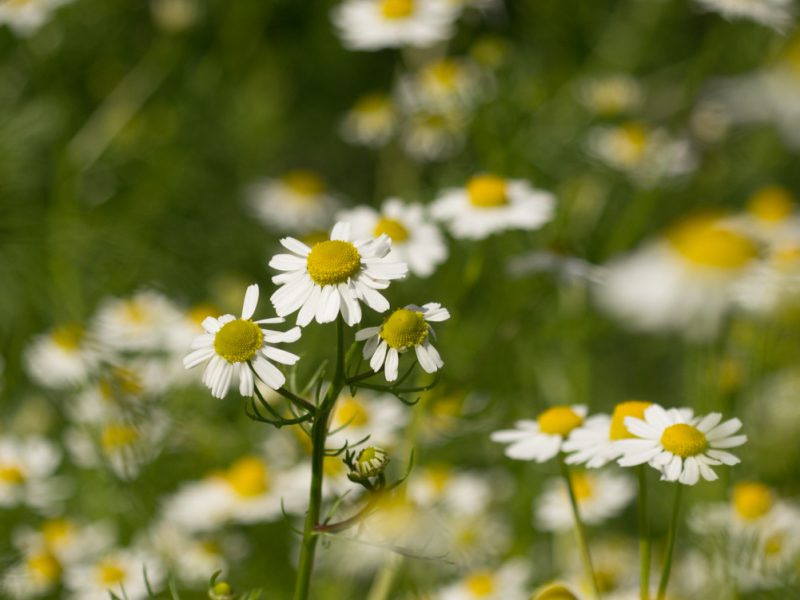
Bare Root Plants – everything you need to know
What is a bare root plant?
A bare root plant is – as it says on the tin – a root that is ‘bare’ having been dug up from the soil. They are available between Autumn and Spring when the foliage has naturally died back and the plants are either dormant or just starting to grow their first leaves. They can be moved and planted at any time during their dormant period – except for when the ground is frozen – and will start growing again as soon as it warms up in the Spring.
What are the advantages of buying bare root plants?
Let’s be honest – planting a bare root plant is a lot easier than growing a plant from seed. It may not be as satisfying, but it is a much quicker way of getting plants established in your herb garden. It can be a good starting point for beginners, or a good solution for people who have limited space or time for germinating seeds.
Are your bare root plants organic?
Yes, all of our bare root plants are from our own nursery and certified organic by the Soil Association. They are grown with love and irrigated with water from a spring-fed pond.
When is the best time to plant bare roots?
Early Spring is usually considered to be the best time to plant bare roots, when the plants are still dormant but the ground is just starting to warm up. However, most perennials can be planted at any time between Autumn and Spring so long as it is not too cold. So we do offer bare roots throughout the winter, but will put sales on hold if there is a period of freezing weather.
What age and size are the bare roots that you sell?
We send roots of plants that are at least one year old so – in most cases – the plants will flower in their first year of growing in your garden. Roots come in all shapes and sizes, and sometimes they include both new and old growth of unverifiable age. If it is a large root, we may divide it or take a cutting and count one ‘bare root plant’ as a cutting with a healthy bud or ‘eye’ that will grow into a single plant. And if the roots are small and tangled we may bundle a few together so that they grow into a single clump.
How to order bare root plants through your website?
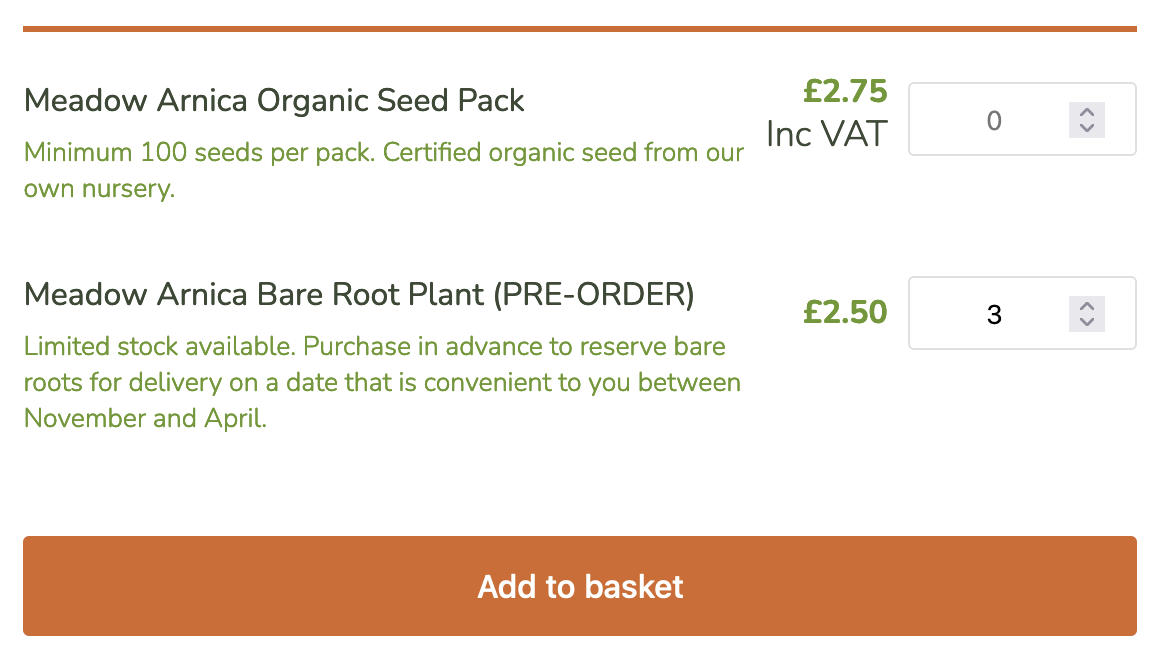
You can order bare root plants from late Summer onwards but we can only send them out between mid-November and April. If you are pre-ordering out of season, just add the bare roots to your basket in the normal way (as in the image below), then on the checkout page you can specify when you would like the bare roots sent. We will e-mail you again nearer the time to confirm the date.
How do you send bare root plants?
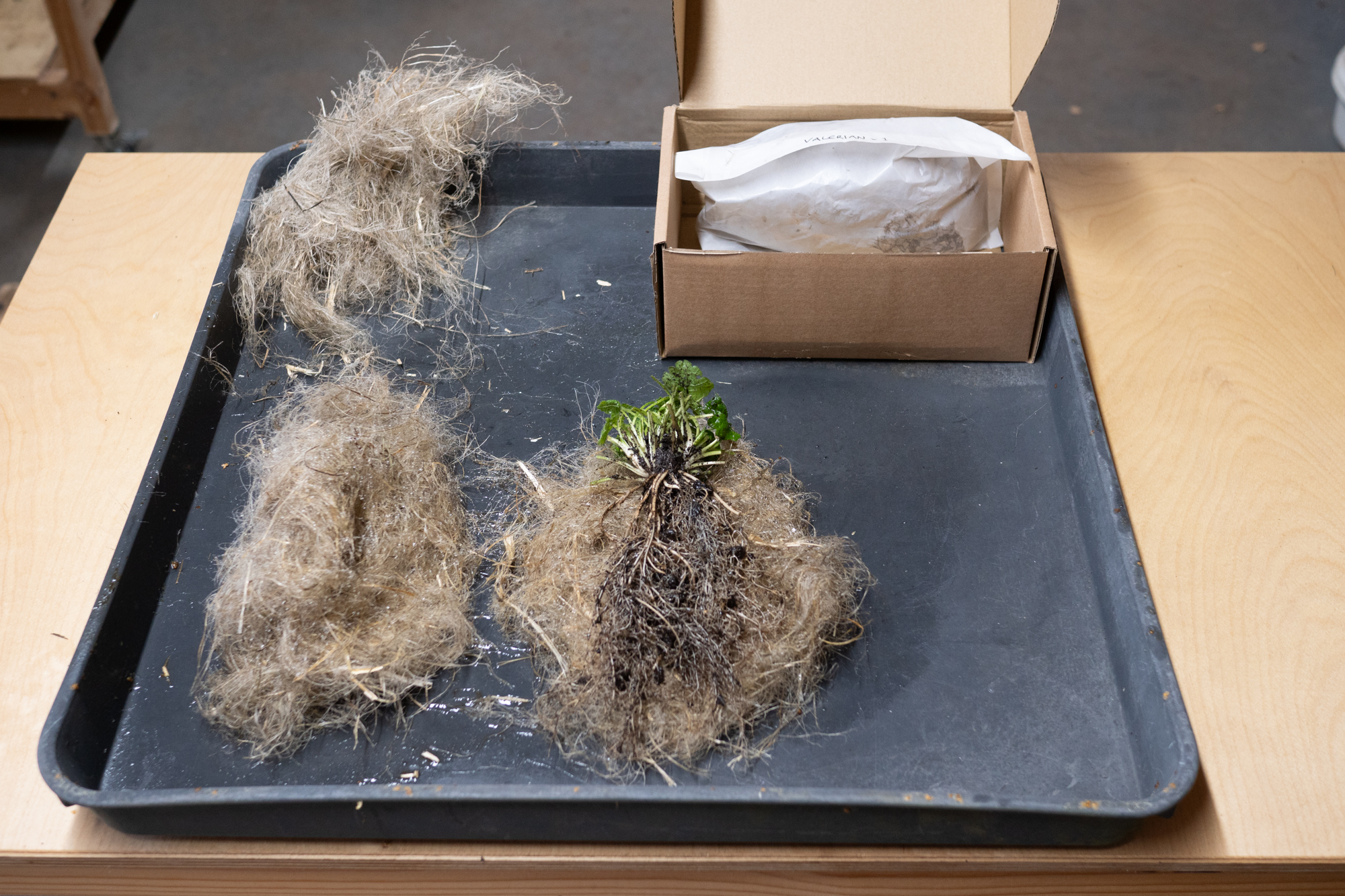
We send our bare root plants wrapped in moistened hemp fibre wrapped in biodegradable glassine paper. The moist hemp fibre prevents the roots from drying out and the glassine paper helps keeps the moisture in, preventing your box from turning into a soggy mess. The hemp fibre can be planted, composted or used as a mulch to help protect your new plants from frost.
How long will it take to receive my bare root plants?
During the winter months we pack bare root orders on Tuesdays and Fridays, and send them out using Royal Mail 24 hour tracked, so you should receive them the following day. If you are at work during the week and are hoping to plant the bare roots at the weekend, you can specify that you would like them sent on a Friday.
Do you send seeds and bare roots together in the same parcel?
If you are pre-ordering bare roots and your order also contains seed packs, we will send the seed packs in advance and will only charge for postage of the bare roots (£5.50 for Royal Mail 24 hour tracked). If you are ordering during the bare root season (i.e. mid-November to April) we will send them together with the the seeds in a reusable ziplock bag to prevent them from getting damp alongside the moistened bare root plants. This is the only time we use plastic in our packing.
Please note that we only pack bare roots two days a week, so if you need your seeds urgently (i.e. the next day) the best solution is to place two orders – one for the seed packs and one for the bare roots.
How often do you send out bare roots?
We pack bare root orders on Tuesdays and Fridays and send them using Royal Mail 24 hour tracked so you *should* receive them on a Wednesday or Saturday (the Royal Mail service is not 100% reliable, so we cannot guarantee arrival the next day).
What should i do when the bare roots arrive?
When your plants arrive you can either plant them straight into the ground (ideally pre-prepared), or you can plant them into pots and let them get established in a sheltered spot, or in a greenhouse, before planting out later in the Spring. If the roots feel dry on arrival soak them in a bucket of water for a few hours before planting.
How long can the bare roots be kept before planting?
We recommend planting them as soon as possible, but if you don’t have time to plant them immediately, don’t worry. Keep them outside and make sure they don’t dry out – you could even water the entire box of bare roots in their original packing to buy you some extra time if needed. Larger fleshy rhizomes will survive for longer than thin roots, so the survival time will vary from species to species.